Sunday, January 27, 2013

Tell the Wolves I'm Home, by Carol Rifka Brunt

There is nothing like a book that can be so sad, and yet make you believe again in how fundamentally good and beautiful everything really is.
Tell the Wolves I'm Home is a book like that.

So affirming, so sad, youthful and yet wise. It's all the best things about being a teenager and experiencing the intensity of real love and real loss.

Or being anyone and experiencing the intensity of real love and real loss.

It's not a perfect novel -- but it was that novel that was perfectly what I needed to read right now. Tell the Wolves I'm Home was like getting a letter from a really good friend who wrote to tell you how much you matter.

June Elbus loses her beloved uncle Finn to AIDS in 1986, when the particular cruelties of that diseases were just beginning to stoke fear and ravage lives without mercy.

June is awkward. Incredibly so. She's that kid who dresses like she believes she lives in the Middle Ages. And who, in fact, does like to pretend that she lives in the Middle Ages.

Only her beloved Uncle Finn (the remarkably financially successful artist) sees her. Only he knows her heart. And when she confesses to him one afternoon that she goes to the woods after school to pretend she's in another world:

He laughed and bumped his should against mine...We both knew we were the biggest nerds in the whole world.

When she loses him, she fears total invisibility:

Now that Finn's gone, nobody knows that I go to the woods after school. Sometimes I think nobody even remembers those woods exist at all.

But a few weeks after his death, a visit from a suspiciously unofficial postman starts June on her journey towards discovering that we are all invisible, and that we all need someone to see us. June herself, her seemingly-perfect older sister Greta, her complicated mother, and Finn's partner and love-of-his-life, Toby.

Almost implausibly self-aware June is, at times, also implausibly blind to her sister Greta's jealousy, heartache, and cries for help, but it is her relationship with Toby, a connection so outside the boundaries of what any normal person might expect out of a friendship, that is the driving emotional force of this novel. In losing Finn, they find each other, and together they create that sacred liminal space that all storybook friends know.

In one moment, after spending a magical day with Toby, June sits beside him and muses:

I felt like I had proof that not all days are the same length, not all time has the same weight. Proof that there are worlds and worlds and worlds on top of worlds, if you want them to be there.

Faithful readers of this blog will know that this is one of my most cherished beliefs.

It is difficult, at times nearly impossible, to find those worlds, particularly in moments of grief or loss. But a novel like Tell the Wolves I'm Home can be a very strong start.

Towards the end of the story, Toby tells June about his relationship with Finn. And he asks her:

"He saved me, you know?"

Toby means literally. But he also means in the ways that we are always saving each other -- by seeing one another for our best selves and helping one another to find worlds on top of and within worlds. And so, Dear Reader, does June save Toby; Toby saves June, and they saved me a little bit. Right when I needed it.


If you're not much of a YA fan, this might not be the novel for you. But if, like me, you still believe the best moments are those when you can pretend to be part of some secret, separate world, well, this novel will make your nerd-heart feel it is home.

Sunday, December 16, 2012

On My List

Here's the Christmas List I made yesterday. Christmas Reading List that is. 

Literary:
Drown and This is How You Lose Her by Junot Diaz
Let the Great World Spin by Colum McCann

Literary Science Fiction:
The Wind-up Bird Chronicle by Haruki Murakami
Cloud Atlas by David Mitchell

Mystery:
Faithful Place by Tana French
Gone Girl by Gillian Flynn

Where should I start?

Sunday, November 25, 2012

The Fault in Our Stars: Emotional Sadism

Ok, ok, I just said that to get your attention. But listen:

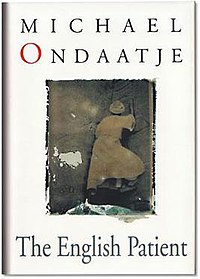
I love sad stories. I promise. Bridge to Terabithia is my Favorite-capital-F, and The English Patient and Atonement, both films and novels, are to me the epitome of beauty. I raised five years worth of middle school students on Of Mice and Men and Romeo and Juliet, assuring their parents at every Parents Night that their children's emotional lives would only be deepened and enriched, not scarred, by the inevitable tragedy in each of these texts, and now I gleefully teach an eleventh grade curriculum where virtually every text ends in a suicide.

I believe strongly that young readers need to be exposed to these texts. Need to be changed and challenged by the rich and immense griefs which are now an essential thread of our cultural narrative and inevitably part of our own lives. And I indulge, occasionally, in revisiting these texts for some good old-fashioned borderline-masochistic catharsis.

But John Green's monumentally popular, beautifully-titled The Fault in Our Stars is something else entirely.

Now, I say all of this not to disparage John Green or his project. And I am all for anything -- anything -- that gets people to read (I'm talking to you, Stephenie Meyer). And his work is well-written, and delightfully wordy, and his narrative voice is smart and literary and true. So there's that.

And there are children with cancer who need their stories told. And those stories are certainly worth telling.

But I get the sense from TFIOS that Green is not writing for kids with cancer. He is writing for kids who are healthy.

And perhaps it is actually a mark of his success that in so doing, he exposes readers who have never faced real, actual, living, breathing death, either literal or metaphorical (death of a loved one, death of a relationship, death of a dream...I could go on) to Real Death's gaunt and haunting reality.

Readers pick up TFIOS because they want to feel something -- feel something in the way that Romeo and Juliet or Bridge to T. makes them feel. Something real and undeniably important.

In Green's star-cross'd lovers Augustus and Hazel (and they call themselves such, placing themselves and Green's story squarely and self-consciously within that tradition) he artfully builds a new pair of lovers for the ages, lovers who somehow deny and defy their youth through the hospital equipment that literally weighs them down throughout the story and their overpowering awareness of their own mortality and their own legacy.

But Green doesn't just play with the star-cross'd lovers trope. He kills it. And then buries it. And makes it attend its own funeral.

Oh, Hazel and Augustus are likable and smart and all of the wonderful things we hope our protagonists will be. They are Leslie and Jess, Juliet and Romeo, Viola and Shakespeare.

Many people I respect love this book. And I prepared to lose myself within its tragic pages with the total abandon restricted to those most wonderfully sad reads listed above. But, Dear Reader, by the time I was 100 pages in I had to put it down between chapters in order to catch my breath. What I experienced was not the sweet sadness of Lennie's final gaze out into the hills of California or Jess' stoic resolve to live on for what Leslie represented to him, but the actual real pain of facing something truly terrible.

Perhaps this is a mark of Green's success. But as an adult writing for a young adult audience, I wonder about his purpose. Even the adult who has lived the most charmed life has had to face some kind of real loss and the grieving process that follows. A process that sometimes feels a lot more like stasis. TFIOS evoked that kind of loss for me.

By the time Augustus listens to Hazel read his own eulogy, I had to stop altogether.

I don't know. Maybe I just talked myself out of my own argument. But I expected to love this book.

And instead it just brought to mind the real pain and loss I've felt in my own charmed life.

And I can't help but imagine that my seventeen-year-old self wouldn't have known what was happening to her under Mr. Green's skillful hand.

And that makes me sad.

But maybe that's the point.

Am I being hypocritical here?


Friday, November 23, 2012

The Great Gatsby

If you get the ambition to pick up a classic this winter, I'm all for it. And if you're diligent and ambitious enough to get through Anna Karenina in preparation for or celebration of Keira Knightley's bodice-ripper, well, good luck with the mowing scene.

But not just because Baz Luhrmann's Gatsby will be released this spring, Gatsby is without a doubt the classic you haven't read since high school that is worth your time. You'll read it on a Saturday or in a weekend, and you will finish feeling transcendent.

What a gem this book is.

The plot is sexy (so sexy!), fast-paced, and devastating. The language is incandescent. The characters are beautiful and damned.

And its lasting impression is at once the building and the destruction of our national myth.

Monday, November 5, 2012

A Post-Catcher World

Emily Temple at Flavorwire proposes these 10 Novels to Replace Catcher in the Rye as the Perfect Teen Book. Looking to pick up something relevant, readable, and new myself, I'm interested. I would also like to add Skippy Dies, Paul Murray's painful paean to teenage angst -- the real kind. It's about ... it's about how "like, people are always going somewhere? Like everybody's always trying to be not where they are?..."

"It's like, you know, inside every stove there's a fire. Well, inside every grass blade there's a grass blade, that's just like burning up with being a grass blade. And inside every tree, there's a tree, and inside every person there's a person, and inside this world that seems so boring and ordinary, if you look hard enough, there's a totally amazing magical beautiful world."

That's what Skippy Dies is about.

Definitely worth it.

Incidentally, I'm about to teach Catcher in a few weeks to ninth graders. Are we, as Emily Temple and Jessica Roake at Slate suggest, living in a post-Catcher world?


Thursday, August 9, 2012

What I Think You Should Take to the Beach

A few people have asked me recently what I think they should pack with them on their August beach trip. I'm only offering a few words on each title, but please, add your thoughts...

Here goes...

Anything by Tana French. Particularly In the Woods. Smart, totally engrossing, psychologically insightful, wonderful characters.


The Lonely Polygamist by Brady Udall is epic, hilarious, and deeply moving. And I loved Rusty more than any character since Owen Meany. I'm going to keep recommending this one til everybody listens...


Just had to make myself put down The Art of Fielding to write this post, and it had me almost crying. A good, old-fashioned, compelling novel.


Beautifully written, a little sci-fi, a little mystery, this novel has been on my favorites list for a long time. It's a little bit of a love story, it's a little bit strange, it's totally gorgeous.

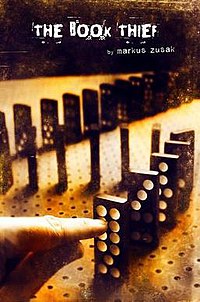
Technically a young adult novel, The Book Thief is one of my favorite reads of all time. And it's long enough to keep you busy for a while. Part graphic novel, it might remind you of a more grown-up Number the Stars -- that moving, that pure.


I'd also add Freedom by Jonathan Franzen, The Age of Miracles, and The Name of the Wind (for fantasy fans) -- those are all reviewed elsewhere on this blog.

Happy Reading! May you find that magical, liminal place between perfect awareness and perfect escape that all the best books bring.

Friday, August 3, 2012

Thoughts turn to school...

I just read Amy Pine's post on Nerdy Book Club about Renewing a Love of Reading in HS Seniors. (Check out her blog, AmyLovesYA.) It is absolutely full of excellent ideas and brimming with inspiration for cultivating a classroom where the love of reading lives all year long -- not just in the summer. (It particularly caught my eye because she loves Divergent as much as I do.)

Why is even the most avid reader among us so quick to lose the magic of books, burying it beneath a pile of house work and school work?

Nerdy Book Club once again just reminded me to retain that magic.