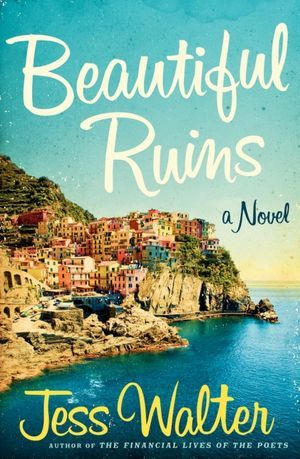
I'm really not sure by what standard Fresh Air's Maureen Corrigan judged Jess Walter's 2012 novel a "literary miracle," but not only did I not find it to be a literary miracle, I didn't even think it was particularly literary.
I found the characters flat and insipid, and the writing, as my friend Mary Ellen noted, like the binding of the book itself, tawdry.
The form, which many reviewers find avant-garde, felt slap-dash, and using Richard Burton and Liz Taylor as characters seemed just lazy.
I didn't finish it. Life's too short.
Saturday, March 29, 2014
Sunday, March 2, 2014
Book Club Shout-Out
Book clubs can be tricky for English teachers. We can be a bit...bossy when it comes to the relaxed literary discussion.
But four of my friends humored me this October when we got together at my place and formed what is now known as the Decades Book Club. The five of us span five decades, from twenties to sixties. We are all teachers, most of use are mothers and wives, some of us have cats, all of us live reflective inner lives.
As I told them on Friday, the Decades Book Club is the best thing to happen to me this year.
Here's what we've read, and our take on each.
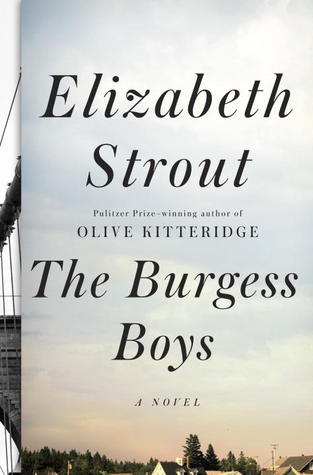
This was my suggestion because I love Olive Kitteridge so much -- and we all did. We are, by nature, a group who loves character-driven literary novels like The Lonely Polygamist and A Prayer for Owen Meany.
We all liked The Burgess Boys. It was a great starting place, and it led to lots of fruitful discussion about family and sibling dynamics. No one we loved as much as old Olive, but certainly worth our time.
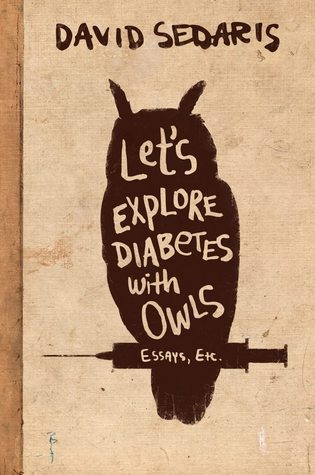
Let's Explore Diabetes with Owls was our least favorite selection. Some of us are big fans of Sedaris, some not so much, but we all kind of felt that he jumped the shark on this collection a bit, exposing new depths of psychological distress and unresolved family issues. (Also he starts waaaay too many paragraphs with "The thing about..." -- "The thing about Hawaii..." "The great thing about sea turtles," "The thing about my unresolved obsessive-compulsive need to pick up trash on the Irish countryside...") His voice is just a bit too navel-gazing to be relatable. This was the only book that some members of the club (cough, ahem, guilty) did not finish.
Though I do really recommend "Loggerheads," if you happen to have a copy lying around.
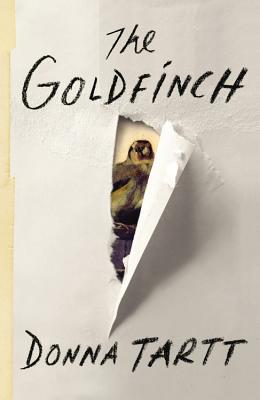
This, dear Reader, is a book to read with a really awesome and committed book club. It is long. Perhaps longer than it needed to be. And I will admit that I might not have finished it without that tiny bit of book-club peer-pressure. Which is so something I never would have admitted before that I needed! I am a Reader-with-a-capital-R! I have a book blog for crying out loud! I don't need wine-lubricated discussions on my Google calendar to get me to read!
The Goldfinch, which, btw, all five of us finished in its entirety, is a tome, but it resulted in my favorite book discussion so far. And that discussion grew into a larger discussion about depression, self-medication, self-deception, and self-sabotage. And art. And philosophies for living and finding meaning.
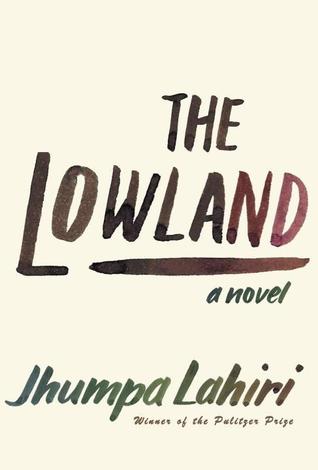
My favorite read of the year. I love everything Lahiri does, though I will admit that it can be a bit uneven. This novel was so beautiful and sad, its characters so real. She had a beautifully detached way of story-telling that makes her voice so moving and yet, somehow, distant, like she is telling some kind of sad fairy tale.
This is the book out of the ones on my list that I would tell you without hesitation to pick up. I read it in a few days and lost myself entirely in its pages. A work of love and sadness. Read it.
Next up: Beautiful Ruins.
I have always been a believer in the ways that books make us better. And I know myself to be so much more fulfilled when I can regularly lose myself to a book.
But as I've said before, reading, and as a result, thinking, can be hard to find time for.
I am beyond thankful for the incredible group of women who have allowed me to find time to think, to connect, to reflect, and most of all, to laugh and to feel so profoundly supported by our shared experience of living meaningfully in the frenzy of modern life.
But four of my friends humored me this October when we got together at my place and formed what is now known as the Decades Book Club. The five of us span five decades, from twenties to sixties. We are all teachers, most of use are mothers and wives, some of us have cats, all of us live reflective inner lives.
As I told them on Friday, the Decades Book Club is the best thing to happen to me this year.
Here's what we've read, and our take on each.
This was my suggestion because I love Olive Kitteridge so much -- and we all did. We are, by nature, a group who loves character-driven literary novels like The Lonely Polygamist and A Prayer for Owen Meany.
We all liked The Burgess Boys. It was a great starting place, and it led to lots of fruitful discussion about family and sibling dynamics. No one we loved as much as old Olive, but certainly worth our time.
Let's Explore Diabetes with Owls was our least favorite selection. Some of us are big fans of Sedaris, some not so much, but we all kind of felt that he jumped the shark on this collection a bit, exposing new depths of psychological distress and unresolved family issues. (Also he starts waaaay too many paragraphs with "The thing about..." -- "The thing about Hawaii..." "The great thing about sea turtles," "The thing about my unresolved obsessive-compulsive need to pick up trash on the Irish countryside...") His voice is just a bit too navel-gazing to be relatable. This was the only book that some members of the club (cough, ahem, guilty) did not finish.
Though I do really recommend "Loggerheads," if you happen to have a copy lying around.
This, dear Reader, is a book to read with a really awesome and committed book club. It is long. Perhaps longer than it needed to be. And I will admit that I might not have finished it without that tiny bit of book-club peer-pressure. Which is so something I never would have admitted before that I needed! I am a Reader-with-a-capital-R! I have a book blog for crying out loud! I don't need wine-lubricated discussions on my Google calendar to get me to read!
Turns out, I really really do.
The Goldfinch, which, btw, all five of us finished in its entirety, is a tome, but it resulted in my favorite book discussion so far. And that discussion grew into a larger discussion about depression, self-medication, self-deception, and self-sabotage. And art. And philosophies for living and finding meaning.
Books are amazing.
My favorite read of the year. I love everything Lahiri does, though I will admit that it can be a bit uneven. This novel was so beautiful and sad, its characters so real. She had a beautifully detached way of story-telling that makes her voice so moving and yet, somehow, distant, like she is telling some kind of sad fairy tale.
This is the book out of the ones on my list that I would tell you without hesitation to pick up. I read it in a few days and lost myself entirely in its pages. A work of love and sadness. Read it.
Next up: Beautiful Ruins.
I have always been a believer in the ways that books make us better. And I know myself to be so much more fulfilled when I can regularly lose myself to a book.
But as I've said before, reading, and as a result, thinking, can be hard to find time for.
I am beyond thankful for the incredible group of women who have allowed me to find time to think, to connect, to reflect, and most of all, to laugh and to feel so profoundly supported by our shared experience of living meaningfully in the frenzy of modern life.
I am better for it.
Friday, December 27, 2013
In One Person by John Irving
*I wrote this review this summer, but never posted it. But if you happen to have a little reading time on your hands, this novel might do the trick. But it's not for everyone -- see below.*
John Irving, I love you so much. But your latest novel, In One Person, is entirely too much about penises.
I mean, you've been writing novels for longer than most of these clowns publishing so-called "literary fiction" these days have been alive. And I love you characters like they are my own friends. And your voice is true and not at all fussy. And your plots are masterful, unexpected, and rarely heavy-handed.
But I just don't know if I can recommend In One Person, as much as I loved it, because of all the penises.
But if you've made it this far in my review, and you're still interested, oh gosh, I loved this book.
It might have been because of the familiar beginning:
A boy with a beautiful mother, an enigmatic lack of a father, a beloved step-father, and a strange New England boarding school faculty-kid upbringing participates in vibrant community theater with an unforgettable grandparent. Fans of THE VOICE will know what I'm talking about.
There's a lot about William Abbott that reminded me of Johnny Wheelwright. At one point, his classmate Delacorte practically echoes Owen Meany word for word:
"I didn't say what your mom looks like," Delacorte insisted. "I just said she was the most beautiful. She's the best looking mom of all the moms!"
I have to imagine these echoes are deliberate on Irving's part, but either way, this novel evoked Owen Meany in an appropriately nostalgic and tender way.
But from those familiar beginnings, William Abbott takes a different path. Much of this story takes place in the small town of First Sister, Vermont, where William comes of age and meets the love of his life, the mysterious librarian, Miss Frost. Miss Frost introduces William to the world of reading, and throughout his life, these books help him to understand himself, others, and his universe:
I raced home from school to read; I raced when I read, unable to heed Miss Frost's command to slow down. I raced to the First Sister Public Library after every school-night supper. I modeled myself on what Richard Abbott had told me of his childhood. I lived in the library, especially on weekends.
See why I liked it?
Meanwhile, he and his best friend Elaine participate in Shakespearean plays and go to school and grow up. And things happen, unexpected things -- they leave First Sister, they live in New York and San Francisco. They face tragedy. But all the while, William always returns home to First Sister, to the wisdom of his family and those novels that helped him grow up.
This novel is about love. It is about different types of love than you or I might experience, and yet they are so recognizable -- that is Irving's gift. He loves people; he loves his characters, who are deeply human in their weirdness, and they are conveyed with such straightforward compassion that this reader could not help but feel ennobled by the end.
And it is a novel about books. About how they help us face things. How they shows us who we are and also allow us to escape from ourselves.
William comes by his creative predilections rightfully -- his grandfather, Grandpa Harry, is renowned for his portrayals of some of Shakespeare's most influential leading ladies. But Grandpa Harry knows some things, and in his infinite wisdom and his infinite strangeness, he tells William:
"Ah, well -- there's people you meet, Bill," Grandpa Harry said. "Some of 'em are merely encounters, nothin' more, but occasionally there's a love-of-your-life meetin', and that's different -- you know?"
It is different. And so is this novel.
Wednesday, August 7, 2013
Two Epic American Tales
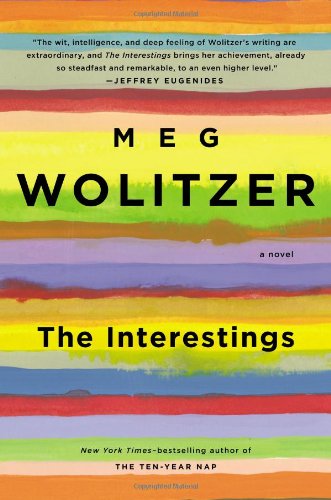
The Interestings is about transformation. The desire for it, the impossibility of it, and the inevitability of it.
It's not as good as Freedom. So start there.
But it's pretty darn close. And I sat down to start reading on a Wednesday when I had nothing else I had to do, and I read 300 pages. And that day became one of my favorite days of the summer. So once you've tackled Freedom, Meg Wolitzer's fresh and moving novel should be next on your list.
You've heard the synopsis by now -- four friends, meet at summer camp, ironically/non-ironically name themselves the Interestings. Some grow up to be more interesting than others.
To me, the best character in this novel is not the protagonist, Jules, but her perpetually-spurned best friend Ethan, who grows up to create a Simpsons-style mega-hit called Figland. Jules may not have, but I loved Ethan.
Jules herself is another story. Jealous to the point of irrationality, she struck me as a less complicated, even less likable Patty Berglund. Which is really saying something.
But Ethan loves her anyway, and I love him for it, and their story becomes the story of all of us growing up through this much more complicated than we ever imagined terrain of adulthood.
Honestly, I do not know why everyone thinks adolescence is so hard. As far as I can tell, from my own (limited) experience & books, real adulthood (We're talking 30's here, people. 20's don't count.) is so much more complex, so much more painful, so much less clear.
And that is what The Interestings is about. It's about how nothing turns out the way we think it will, it's about success and failure, and it's about being loved, and how sometimes, simply being loved just isn't enough.
And it's also about being an adult and losing yourself for a summer's day and 300 pages. Which is a gift.
Middlesex is also about transformation. About the incredible universality and infinite multiplicity of the physical and emotional transformation that we all go through as we grow from children to adults. (Ok, I'm re-granting 20-somethings their adulthood in this second half of this post.)
If you are a book-lover like me who also somehow missed Eugenides' masterpiece when it came out over ten years ago, you are in for an absolutely incredible treat.
Middlesex is a story about a hermaphrodite. But if you are seeking a story about the seedy underside of the transgender world of the early eighties, look elsewhere.
This book is not about a freak-show. It is about how intensely human, and how intensely freakish, each of us is. Even when our hero Cal does find himself in the seedy underside of the trangender world of the early eighties, it is 400 pages into the book, and it somehow becomes so much more about universality than freakishness.
This book is breathtakingly written, flawlessly researched, and deeply moving. It is engrossing enough for a beach read but literary enough for a senior thesis.
Do not miss it.
It's not as good as Freedom. So start there.
But it's pretty darn close. And I sat down to start reading on a Wednesday when I had nothing else I had to do, and I read 300 pages. And that day became one of my favorite days of the summer. So once you've tackled Freedom, Meg Wolitzer's fresh and moving novel should be next on your list.
You've heard the synopsis by now -- four friends, meet at summer camp, ironically/non-ironically name themselves the Interestings. Some grow up to be more interesting than others.
To me, the best character in this novel is not the protagonist, Jules, but her perpetually-spurned best friend Ethan, who grows up to create a Simpsons-style mega-hit called Figland. Jules may not have, but I loved Ethan.
Jules herself is another story. Jealous to the point of irrationality, she struck me as a less complicated, even less likable Patty Berglund. Which is really saying something.
But Ethan loves her anyway, and I love him for it, and their story becomes the story of all of us growing up through this much more complicated than we ever imagined terrain of adulthood.
Honestly, I do not know why everyone thinks adolescence is so hard. As far as I can tell, from my own (limited) experience & books, real adulthood (We're talking 30's here, people. 20's don't count.) is so much more complex, so much more painful, so much less clear.
And that is what The Interestings is about. It's about how nothing turns out the way we think it will, it's about success and failure, and it's about being loved, and how sometimes, simply being loved just isn't enough.
And it's also about being an adult and losing yourself for a summer's day and 300 pages. Which is a gift.
Middlesex is also about transformation. About the incredible universality and infinite multiplicity of the physical and emotional transformation that we all go through as we grow from children to adults. (Ok, I'm re-granting 20-somethings their adulthood in this second half of this post.)
If you are a book-lover like me who also somehow missed Eugenides' masterpiece when it came out over ten years ago, you are in for an absolutely incredible treat.
Middlesex is a story about a hermaphrodite. But if you are seeking a story about the seedy underside of the transgender world of the early eighties, look elsewhere.
This book is not about a freak-show. It is about how intensely human, and how intensely freakish, each of us is. Even when our hero Cal does find himself in the seedy underside of the trangender world of the early eighties, it is 400 pages into the book, and it somehow becomes so much more about universality than freakishness.
This book is breathtakingly written, flawlessly researched, and deeply moving. It is engrossing enough for a beach read but literary enough for a senior thesis.
Do not miss it.
Tuesday, July 30, 2013
Why I love to hate John Green
I'll admit it, and I don't really mean it -- I'm sure he's a great guy. And he's doing great things in this world and making lots of readers really happy. Or devastatingly sad, as the case may be with the cancer book.
But I kinda love to hate John Green.
A lot of the time, his male protagonists are kind of like mini-John Greens.
But as far as I can tell, the vast majority of John Green's readers are teenage girls.
You see where this could begin to get weird. For example, Augustus, in The Fault in Our Stars, who says things like this:
“Oh, I wouldn't mind, Hazel Grace. It would be a privilege to have my heart broken by you.”
And, regarding cigarettes,
“its a metephor, see: you put the killing thing right between your teeth but you don't give it the power to do its killing.”
Things that, as my venerable and sassy colleague Mary would say, "no teenage boy would ever say."
Augustus is hip-as-in-hipster, and he cares about style, and he's verbal and sensitive and emotionally communicative. And he makes up ridiculous metaphors about cigarettes and mortality that I'm not sure if I don't fully understand or if they actually just don't make any sense.
See? Mini-John Green.
Now, writing a mini-me is all well and good. But Green is putting up this mini-me in front of a massive audience of teenage girls who are longing and aching for Augustus Waters/mini-John Green. And so they close their chapter books, and dry their eyes, and open their laptops because they want more.
And what do they find? Not more Augustus Waters. But more John Green. Who is just similar enough, and who understands their longings for those elusive verbal boys just enough to stand in their place for hour upon hour of obsessive internet trolling.
And so it seems, in some ways, his entire Nerdfighting empire is just in the right place to fulfill those desires. Not in any weird, gross way. Just...just enough for it to feel a tiny bit manipulative.
So this is why I really love to hate John Green. I admit it might be because I'm jealous of what he's been able to accomplish when I am certain that I am just as nerdy and love books just as much as he does.
It might be because those damn "Crash Course" videos are so annoyingly reductive-yet-right all the time, Spark Notes-style.
But I think the real reason is that his writing doesn't feel entirely emotionally honest to me. Because John Green is a grown-up. So he knows exactly what kinds of things sensitive, verbal, emotionally communicative young women want to hear. And readers love to hear these things in the mouth of one Augustus Waters.
Mini-John Green.
There's no real harm being done here. As I said, I even support Stephenie Meyer if she gets the people reading. But why is John Green's biggest hit a novel that has a primarily female readership? John Green is a guy. Why isn't he writing books for guys like him? The ones who really need to see that sensitivity-is-strength is not only a viable, but an admirable way to live in this world as a man?
The more narratives of this particular kind of masculinity reach an audience of only females, the more this kind of masculinity will continue to be marginalized. The girls reading Green's books already value this kind of guy. Green should use his considerable power to help this kind of guy value himself.
So that is what I want. I want to see a novel from Green that my male students are raving about. Or, better yet, that all of my students are raving about. The Fault in Our Stars is too easy. It is tucked safely into a particular genre of teenage romance that really isn't all that different from Twilight. It just uses bigger words.
So this is all very high-and-mighty of me, and I'll admit, I've not read all his books, and the Nerdfighter website features guys and girls, and like I said in the beginning, he's doing his part to make the world a better place, and he does have a good vocabulary.
But I still kinda love to hate him.
Wednesday, July 3, 2013
Eleanor & Park, by Rainbow Rowell (Also, The Fault in Our Who?)
In Tim O'Brien's novel The Things They Carried, there is an idea called storytruth. Storytruth is different from happening-truth in that it reflects not of the facts of the story, but the truth of the storyteller. Storytruth lets the reader feel what is real -- more real than facts, more real than dates and names -- Feelings. Consequences. Fears and desires.
Rainbow Rowell's novel Eleanor & Park is storytruth.
And storytruth, my friends, is the point of literature.
Rowell's voice, her characters, her descriptions are so deeply authentic. So perfectly crafted. Park's eventually-black-kohled eyes above his "Kiss Me I'm Irish" t-shirt and Eleanor's at times luscious at times unmanageable red curls are drawn in the most precise detail.
And, Dear Reader, you will love them.
Now, when I heard about this book, I thought -- haven't we had enough of this star-crossed lovers nonsense? Is the young adult market so limited that we must spend the rest of our days reading John Green knock-offs?
Well, like The Hunger Games and the lesser known Divergent (see my review here), Rowell in not only not a knock-off of her better-known fellow author. In my opinion, her work is vastly superior.
And a ton more fun to read.
And her characters way cuter and more loveable and more real all at the same time.
And aside from the (inevitable?) over-enthusiastic English teacher/R&J allusion (We have to be over enthusiastic. It's our job to make the kids a little uncomfortable), Eleanor and Park seem mercifully independent of the stars. And, indeed, of everyone and everything else. Theirs is a complete world, a world at once tender and sexy and every bit as difficult as being -- not just a real teenager -- but a real human.
There is a down-to-earth quality in Rowell's voice that leaves me convinced that she is every bit as much herself, and has always been, as her formidable heroine Eleanor.
Also, in an interview with Publisher's Weekly, Rowell said this:
My junior high and high school existence was depressing, and this [music] made me think there was something else, that someday I’d be an adult and I’d be able to get to it. I wanted Eleanor to have something more than her difficult home life, and I wanted Park to have something to give her, and music did both those things.
An almost gritty edge to the story gives it terrific complexity, yet it is also as bright and pretty and hopeful as we wish all of our love stories to be.
Eleanor and Park find the other world in this one for one another and for the reader.
Reader, you're gonna love it.
Rainbow Rowell's novel Eleanor & Park is storytruth.
And storytruth, my friends, is the point of literature.
Rowell's voice, her characters, her descriptions are so deeply authentic. So perfectly crafted. Park's eventually-black-kohled eyes above his "Kiss Me I'm Irish" t-shirt and Eleanor's at times luscious at times unmanageable red curls are drawn in the most precise detail.
And, Dear Reader, you will love them.
Now, when I heard about this book, I thought -- haven't we had enough of this star-crossed lovers nonsense? Is the young adult market so limited that we must spend the rest of our days reading John Green knock-offs?
Well, like The Hunger Games and the lesser known Divergent (see my review here), Rowell in not only not a knock-off of her better-known fellow author. In my opinion, her work is vastly superior.
And a ton more fun to read.
And her characters way cuter and more loveable and more real all at the same time.
And aside from the (inevitable?) over-enthusiastic English teacher/R&J allusion (We have to be over enthusiastic. It's our job to make the kids a little uncomfortable), Eleanor and Park seem mercifully independent of the stars. And, indeed, of everyone and everything else. Theirs is a complete world, a world at once tender and sexy and every bit as difficult as being -- not just a real teenager -- but a real human.
There is a down-to-earth quality in Rowell's voice that leaves me convinced that she is every bit as much herself, and has always been, as her formidable heroine Eleanor.
Also, in an interview with Publisher's Weekly, Rowell said this:
My junior high and high school existence was depressing, and this [music] made me think there was something else, that someday I’d be an adult and I’d be able to get to it. I wanted Eleanor to have something more than her difficult home life, and I wanted Park to have something to give her, and music did both those things.
An almost gritty edge to the story gives it terrific complexity, yet it is also as bright and pretty and hopeful as we wish all of our love stories to be.
Eleanor and Park find the other world in this one for one another and for the reader.
Reader, you're gonna love it.
Saturday, April 6, 2013
Arcadia by Lauren Groff
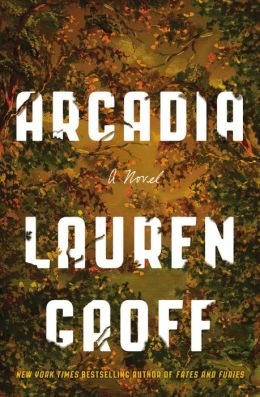
The first half of Lauren Groff's novel Arcadia places itself, and its protagonist, Bit Stone, firmly in the traditions of the American novel, as Bit, like Huckleberry Finn and Jim Burden and so many other American children before him, lives under the vastness of the sky, in the arms of the natural world, and with the promise of a better life of real equality ever just before his grasp:
For a few breaths he forgets himself in the swim of nature around him. Its rhythm is so different from Bit's human own, both more nervous and more patient. He sees a bug that is smaller than a period on a page. He sees the sky, bigger than all that's in his head. An overwhelm from two directions, vast and tiny, together.
The second half of the novel loses Bit to modern life, and as he wanders his way back towards this connection to the land and to his childhood, loses itself a bit, too. Like Bit himself, apart from Arcadia itself, Groff's novel becomes just a bit ordinary:
On the days that he swings through the city on his walks, he can almost grasp what they lost...It was the story they had told themselves from the moment the Dutch had decanted from their ships onto the oyster-strewn island and traded land for guilders: that this place filled with water and wildlife was special, rare, equitable...That this equality of purpose would keep them safe.
Arcadia is a commune in the forest and fields of New York in the 1970's. It is peopled with mythic hippies, included Bit's compelling and fully-realized parents, Hannah and Abe. Born three month premature, tiny Bit grows up in the womb of this not-untroubled, yet gorgeously idyllic world where through his wide and transcendental eyes Groff's reader is brought fully into Arcadia's spell. These years of Bit's life are a reading experience I will not soon forget.
But as utopias must, Arcadia falls, and Bit is sent out into the real world. In the same way that Bit never finds himself quite at home in New York City's streets, the novel itself never regains its purity and focus, wandering as Bit does through modern life without much sense of larger purpose.
Groff's prose gets distracted by a 2018 flu epidemic that has the world on quarantine and that pushes Bit back into the arms of Arcadia. But in a fiction landscape where it seems almost every protagonist finds himself with a similar crisis on his hands, I find myself wishing that Groff, like Arcadia's inhabitants themselves, had kept things more simple.
I wholeheartedly recommend that you read Arcadia. Its spell is powerful. But it will be broken sooner than you wish.
Which I guess might be exactly the point.
For a few breaths he forgets himself in the swim of nature around him. Its rhythm is so different from Bit's human own, both more nervous and more patient. He sees a bug that is smaller than a period on a page. He sees the sky, bigger than all that's in his head. An overwhelm from two directions, vast and tiny, together.
The second half of the novel loses Bit to modern life, and as he wanders his way back towards this connection to the land and to his childhood, loses itself a bit, too. Like Bit himself, apart from Arcadia itself, Groff's novel becomes just a bit ordinary:
On the days that he swings through the city on his walks, he can almost grasp what they lost...It was the story they had told themselves from the moment the Dutch had decanted from their ships onto the oyster-strewn island and traded land for guilders: that this place filled with water and wildlife was special, rare, equitable...That this equality of purpose would keep them safe.
Arcadia is a commune in the forest and fields of New York in the 1970's. It is peopled with mythic hippies, included Bit's compelling and fully-realized parents, Hannah and Abe. Born three month premature, tiny Bit grows up in the womb of this not-untroubled, yet gorgeously idyllic world where through his wide and transcendental eyes Groff's reader is brought fully into Arcadia's spell. These years of Bit's life are a reading experience I will not soon forget.
But as utopias must, Arcadia falls, and Bit is sent out into the real world. In the same way that Bit never finds himself quite at home in New York City's streets, the novel itself never regains its purity and focus, wandering as Bit does through modern life without much sense of larger purpose.
Groff's prose gets distracted by a 2018 flu epidemic that has the world on quarantine and that pushes Bit back into the arms of Arcadia. But in a fiction landscape where it seems almost every protagonist finds himself with a similar crisis on his hands, I find myself wishing that Groff, like Arcadia's inhabitants themselves, had kept things more simple.
I wholeheartedly recommend that you read Arcadia. Its spell is powerful. But it will be broken sooner than you wish.
Which I guess might be exactly the point.
Subscribe to:
Posts (Atom)