A few people have asked me recently what I think they should pack with them on their August beach trip. I'm only offering a few words on each title, but please, add your thoughts...
Here goes...
Anything by Tana French. Particularly In the Woods. Smart, totally engrossing, psychologically insightful, wonderful characters.
The Lonely Polygamist by Brady Udall is epic, hilarious, and deeply moving. And I loved Rusty more than any character since Owen Meany. I'm going to keep recommending this one til everybody listens...
Just had to make myself put down The Art of Fielding to write this post, and it had me almost crying. A good, old-fashioned, compelling novel.
Beautifully written, a little sci-fi, a little mystery, this novel has been on my favorites list for a long time. It's a little bit of a love story, it's a little bit strange, it's totally gorgeous.
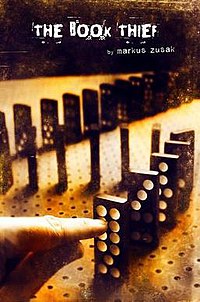
Technically a young adult novel, The Book Thief is one of my favorite reads of all time. And it's long enough to keep you busy for a while. Part graphic novel, it might remind you of a more grown-up Number the Stars -- that moving, that pure.
I'd also add Freedom by Jonathan Franzen, The Age of Miracles, and The Name of the Wind (for fantasy fans) -- those are all reviewed elsewhere on this blog.
Happy Reading! May you find that magical, liminal place between perfect awareness and perfect escape that all the best books bring.
Thursday, August 9, 2012
Friday, August 3, 2012
Thoughts turn to school...
I just read Amy Pine's post on Nerdy Book Club about Renewing a Love of Reading in HS Seniors. (Check out her blog, AmyLovesYA.) It is absolutely full of excellent ideas and brimming with inspiration for cultivating a classroom where the love of reading lives all year long -- not just in the summer. (It particularly caught my eye because she loves Divergent as much as I do.)
Why is even the most avid reader among us so quick to lose the magic of books, burying it beneath a pile of house work and school work?
Nerdy Book Club once again just reminded me to retain that magic.
Why is even the most avid reader among us so quick to lose the magic of books, burying it beneath a pile of house work and school work?
Nerdy Book Club once again just reminded me to retain that magic.
Thursday, July 19, 2012
The Age of Miracles by Karen Thompson Walker
The Age of Miracles by Karen Thompson Walker is a beautiful book. My favorite of the summer so far.
In the beginning of the novel, eleven-year-old Julia's world changes when scientists announce that they have observed a slowing of the earth's rotation. The cause is unknown, the effects, for the most part, unpredictable and uncontrollable. Slowly, the days lengthen, gravity shifts, the power flickers, seagulls and whales, then grass and eucalyptus become extinct. All the while, Julia and the adults around her struggle to understand what is happening to them and look for ways to keep the world as they know it, one precious moment of daylight at a time.
Walker's end-of-the-world is no fiery apocalypse. It is one where the taste of grapes and strawberries, then even the smell of grass and the sounds of birds, are forgotten, but human life on earth goes on, in its persistence, insensible to the loss of these great beauties.
And before the backdrop of these cosmic miracles Julia's own life unfolds: she takes piano, plays soccer. She is good at math, she loses her best friend Hanna, she eats lunch alone in the library, her birthday is forgotten, she forms a bond with Seth Moreno. Her parents fight. She and Seth visit the ocean to help to save the whales beached there, casualties of the shifting tides and magnetic fields of earth:
We rushed to fill our cups with water and then ran back across the thick band of mud. We looked for the driest whale, the one most in need. We found it at the edge of the group, and we imagined that it was older than the others. Its skin was striped white with scars. I shooed flies from its eyes, one eye at a time. Seth poured our meager water supply over its head and into its mouth. He petted its side. I felt an urgency like love.
"Hey, kids," someone called from behind us. It was a man in a beach hat, an empty white bucket swinging from one hand. A gust of wind drowned out what he said, so he shouted it again: "That one's already dead."
The futile beauty of this scene almost made me cry, and as Julia's world's tragedy unfolds, this futile beauty only grows.
And her days grow to 40, then 64, then 78 hours; tortuously hot periods of dangerous radiation followed by frigid deserts of dark.
This is not an adventure story. Nor is it, exactly, a coming of age story. Julia, though relatable, is somehow transparent as a narrator. The plot is simple, but effectively so. Julia's voice invites readers to overlay their own adolescences onto the backdrop of the slow and inexorable end of life as we know it.
And at the same time, Walker asks, perhaps begs, her readers to see their own lives reflected in Julia's, not out of some environmentalist crusade (noble though those may be), but out of something much more simple:
Nothing is certain.
Not the tide not the birds not the sun.
But our world is very beautiful.
Julia's story is an unhurried narrative that becomes, in so many ways, an elegy for the world that we are so lucky to still have hold of. At least for now. Nothing I've read in a long time has made me feel so acutely the beauty and promise of this Earth we still have, and its incredible fragility.
One day, Julia's street is destroyed as repair crews work feverishly to keep up with the damage the radiation storms are wreaking on the power grid. She and Seth leave their names in wet cement. Shortly thereafter, she looses him.
Looking back, Julia remembers:
We dipped our fingers in the wet cement, and we wrote the truest, simplest things we knew -- our names, the date, and these words.
We were here.
Reading this novel on a summer afternoon, I emerged from its pages and the coffee shop where I had been reading alongside a friend. The heat index in Baltimore had reached 113 that day, a storm was brewing, and we looked up together at remarkable clouds that she remembered from her childhood as a presage of tornadoes. As we walked down the street and hot wind whipped up the day's dust in front of us, I wasn't quite sure if I was in the real world or back in Walker's luminous pages.
This, Dear Reader, is a book worth reading.
In the beginning of the novel, eleven-year-old Julia's world changes when scientists announce that they have observed a slowing of the earth's rotation. The cause is unknown, the effects, for the most part, unpredictable and uncontrollable. Slowly, the days lengthen, gravity shifts, the power flickers, seagulls and whales, then grass and eucalyptus become extinct. All the while, Julia and the adults around her struggle to understand what is happening to them and look for ways to keep the world as they know it, one precious moment of daylight at a time.
Walker's end-of-the-world is no fiery apocalypse. It is one where the taste of grapes and strawberries, then even the smell of grass and the sounds of birds, are forgotten, but human life on earth goes on, in its persistence, insensible to the loss of these great beauties.
And before the backdrop of these cosmic miracles Julia's own life unfolds: she takes piano, plays soccer. She is good at math, she loses her best friend Hanna, she eats lunch alone in the library, her birthday is forgotten, she forms a bond with Seth Moreno. Her parents fight. She and Seth visit the ocean to help to save the whales beached there, casualties of the shifting tides and magnetic fields of earth:
We rushed to fill our cups with water and then ran back across the thick band of mud. We looked for the driest whale, the one most in need. We found it at the edge of the group, and we imagined that it was older than the others. Its skin was striped white with scars. I shooed flies from its eyes, one eye at a time. Seth poured our meager water supply over its head and into its mouth. He petted its side. I felt an urgency like love.
"Hey, kids," someone called from behind us. It was a man in a beach hat, an empty white bucket swinging from one hand. A gust of wind drowned out what he said, so he shouted it again: "That one's already dead."
The futile beauty of this scene almost made me cry, and as Julia's world's tragedy unfolds, this futile beauty only grows.
And her days grow to 40, then 64, then 78 hours; tortuously hot periods of dangerous radiation followed by frigid deserts of dark.
This is not an adventure story. Nor is it, exactly, a coming of age story. Julia, though relatable, is somehow transparent as a narrator. The plot is simple, but effectively so. Julia's voice invites readers to overlay their own adolescences onto the backdrop of the slow and inexorable end of life as we know it.
And at the same time, Walker asks, perhaps begs, her readers to see their own lives reflected in Julia's, not out of some environmentalist crusade (noble though those may be), but out of something much more simple:
Nothing is certain.
Not the tide not the birds not the sun.
But our world is very beautiful.
Julia's story is an unhurried narrative that becomes, in so many ways, an elegy for the world that we are so lucky to still have hold of. At least for now. Nothing I've read in a long time has made me feel so acutely the beauty and promise of this Earth we still have, and its incredible fragility.
One day, Julia's street is destroyed as repair crews work feverishly to keep up with the damage the radiation storms are wreaking on the power grid. She and Seth leave their names in wet cement. Shortly thereafter, she looses him.
Looking back, Julia remembers:
We dipped our fingers in the wet cement, and we wrote the truest, simplest things we knew -- our names, the date, and these words.
We were here.
Reading this novel on a summer afternoon, I emerged from its pages and the coffee shop where I had been reading alongside a friend. The heat index in Baltimore had reached 113 that day, a storm was brewing, and we looked up together at remarkable clouds that she remembered from her childhood as a presage of tornadoes. As we walked down the street and hot wind whipped up the day's dust in front of us, I wasn't quite sure if I was in the real world or back in Walker's luminous pages.
This, Dear Reader, is a book worth reading.
Saturday, July 7, 2012
Treasure Island!!! by Sara Levine
In Treasure Island!!! by first-time novelist Sara Levine, our unnamed heroine/pirate swashbuckles her way through a job (that she hates), a boyfriend (who isn't really into boldness, turns out), her sister (fat), a very-expensive parrot named Little Richard (She wants him to squawk "Steer the boat, girlfriend!" but he really only gets as far as "boat!" before she feeds him mac-and-cheese poisoned with prescription meds, and he winds up in her mother's already over-crowded freezer), a best friend (also, like boyfriend, not big on boldness), and possibly one of the major veins that runs through said-sister's right hand. The last of these with a cake knife; the other damages requiring no weapon more dangerous than our heroine's deliciously misguided sense of self-importance.
However, if nothing in the paragraph above struck you as particularly funny, this probably isn't the book for you.
Levine's voice is true, our Heroine (henceforth in this review known as "H") truly abhorrent, and the mayhem that results is a well-spent summer afternoon.
Our tale begins when H's sister Adrianna leaves a library copy of Robert Louis Stevenson's Treasure Island lying around the house, after she decides not to read it with her third grade class ("I hate a book with no girls, sister Adrianna proclaims on the the second page.) H picks it up and decides to cleave to "boy hero Jim Hawkins' best qualities":
BOLDNESS
RESOLUTION
INDEPENDENCE
HORN-BLOWING
(Rebecca Barry's NYTimes review intelligently explicates what exactly "horn-blowing" just might be, but personally I recommend you just leave it up to your imagination. Trust me, you'll come up with a few things.)
To be honest, I frequently find picaresque novels tiresome, but Island!!! is smart, fast-paced, and allowed me to live quite happily within our heroine's warped and thwarted logic. As H plunders and pillages her way through her own life as a 25-year-old person patently without purpose or aim, her deeply misguided attempts at self-actualization may feel vaguely familiar to anyone who has been recently (or ever) a 25-year-old non-hornblowing person without purpose or aim. At one moment, as she sits in a doctor's office in pursuit of anxiety medication, her doctor notes, "You do seem anxious. You shredded your gown," and H replies:
"Well, it takes an awful lot of energy to give birth to one-self. It's not as though you do one bold thing and then you are bold. The thing about adventure is that you have to keep doing it, day in and day out. I don't know, can it ever be definitively accomplished?"
Can I get a "Steer the boat, girlfriend!"?
Levine's creation of a heroine so totally ridiculous and yet so recognizable is truly an accomplishment, and if the climax feels a little forced, this reader will forgive her, particularly after reading the flawlessly hilarious events of the final few pages. As you might imagine, nothing ends well for H, Adrianna, or the rest of the crew, but the novel will leave you laughing, and yes, perhaps seeking a little horn-blowing of your own, long after the few happy hours you will spend in its pages.
However, if nothing in the paragraph above struck you as particularly funny, this probably isn't the book for you.
Levine's voice is true, our Heroine (henceforth in this review known as "H") truly abhorrent, and the mayhem that results is a well-spent summer afternoon.
Our tale begins when H's sister Adrianna leaves a library copy of Robert Louis Stevenson's Treasure Island lying around the house, after she decides not to read it with her third grade class ("I hate a book with no girls, sister Adrianna proclaims on the the second page.) H picks it up and decides to cleave to "boy hero Jim Hawkins' best qualities":
BOLDNESS
RESOLUTION
INDEPENDENCE
HORN-BLOWING
(Rebecca Barry's NYTimes review intelligently explicates what exactly "horn-blowing" just might be, but personally I recommend you just leave it up to your imagination. Trust me, you'll come up with a few things.)
To be honest, I frequently find picaresque novels tiresome, but Island!!! is smart, fast-paced, and allowed me to live quite happily within our heroine's warped and thwarted logic. As H plunders and pillages her way through her own life as a 25-year-old person patently without purpose or aim, her deeply misguided attempts at self-actualization may feel vaguely familiar to anyone who has been recently (or ever) a 25-year-old non-hornblowing person without purpose or aim. At one moment, as she sits in a doctor's office in pursuit of anxiety medication, her doctor notes, "You do seem anxious. You shredded your gown," and H replies:
"Well, it takes an awful lot of energy to give birth to one-self. It's not as though you do one bold thing and then you are bold. The thing about adventure is that you have to keep doing it, day in and day out. I don't know, can it ever be definitively accomplished?"
Can I get a "Steer the boat, girlfriend!"?
Levine's creation of a heroine so totally ridiculous and yet so recognizable is truly an accomplishment, and if the climax feels a little forced, this reader will forgive her, particularly after reading the flawlessly hilarious events of the final few pages. As you might imagine, nothing ends well for H, Adrianna, or the rest of the crew, but the novel will leave you laughing, and yes, perhaps seeking a little horn-blowing of your own, long after the few happy hours you will spend in its pages.
Thursday, July 5, 2012
I enter the Blogosphere...
So thanks to Goodreads, this morning I just discovered Insatiable Booksluts...
...and all of these awesome blogs...
and I am both thrilled and overwhelmed by how many people are already doing what The Inattentive Reader is trying to do in so many incredibly successful ways.
Anyhow, point is, you should probably give up on this little nascent project of a blog and just read their stuff.
I probably will.
And these people know what they're doing.

Monday, July 2, 2012
1Q84, by Haruki Murakami
Japanese writer Haruki Murakami's novel 1Q84 is a quiet, introspective, and character-driven thriller. It divulges its secrets delicately, and never completely, and the other world in which our heroine and hero find themselves never fits neatly into the tidy framework that American readers may expect from their dystopias.
But when it comes down to it, why should a dystopia always answer the questions we readers ask of it?
This is by no means a novel for the reader who hopes to get to the answers, or the end, quickly. By turns lucid, strange, and downright disgusting, the world of 1Q84 is, in all the right ways, not unlike, and yet completely separate from, our own. Its main characters, Aomame, the unlikely assassin, and her childhood love, the long-lost writer Tengo, are beautifully realized from the novel's earliest pages, and even in their diurnal meanderings, which, I warn you, are extensive, I found them fascinating.
As Aomame is forced to flee after a particularly high-profile assassination, she looks back at the apartment that had been her home:
Standing by the front door, she turned for one last look, aware that she would never be coming back. The thought made the apartment appear unbelievably shabby, like a prison that only locked from the inside, bereft of any picture or vase. The only thing left was the bargain-sale rubber plant on the balcony, which she had bought instead of a goldfish. She could hardly believe she had spent years of her life in this place without question or discontent.
"Good-bye," she murmured, bidding farewell not so much to the apartment as to the self that had lived here.
Rich in allusion and psychological depth, 1Q84 is a book to be lived in, explored, questioned, doubted, and believed it.
But, as is so often the case with self-knowledge, demand reasons or a rapid resolution, and you will be disappointed.
But when it comes down to it, why should a dystopia always answer the questions we readers ask of it?
This is by no means a novel for the reader who hopes to get to the answers, or the end, quickly. By turns lucid, strange, and downright disgusting, the world of 1Q84 is, in all the right ways, not unlike, and yet completely separate from, our own. Its main characters, Aomame, the unlikely assassin, and her childhood love, the long-lost writer Tengo, are beautifully realized from the novel's earliest pages, and even in their diurnal meanderings, which, I warn you, are extensive, I found them fascinating.
As Aomame is forced to flee after a particularly high-profile assassination, she looks back at the apartment that had been her home:
Standing by the front door, she turned for one last look, aware that she would never be coming back. The thought made the apartment appear unbelievably shabby, like a prison that only locked from the inside, bereft of any picture or vase. The only thing left was the bargain-sale rubber plant on the balcony, which she had bought instead of a goldfish. She could hardly believe she had spent years of her life in this place without question or discontent.
"Good-bye," she murmured, bidding farewell not so much to the apartment as to the self that had lived here.
Rich in allusion and psychological depth, 1Q84 is a book to be lived in, explored, questioned, doubted, and believed it.
But, as is so often the case with self-knowledge, demand reasons or a rapid resolution, and you will be disappointed.
Monday, June 18, 2012
Divergent, by Veronica Roth
Having had a conversation, often in hushed tones, about Fifty Shades of Gray with everyone from my colleagues to my closest friends to my physical therapist, I've been thinking a lot lately about what makes something catch fire (forgive the pun) in the public imagination the way Shades and Hunger Games have recently. It's not that I question the appeal of these texts: epic and dystopian tropes and, well, sex, don't need analysis here.
I understand why Hunger Games captures and entrances us. But why don't more people realize that the feelings these texts evoke are the feelings that any fully-realized and even passably well-written world has to offer?
Having spent two very happy days of summer vacation lost in Veronica Roth's 2011 YA novel Divergent, I assure you, Dear Reader: Hunger Games is magic. But its magic is the magic of books and stories, nothing more secret or hard to come by, but every bit as sacred.
I enjoyed but never loved Hunger Games. But, despite its imperfections, I loved Divergent. Its heroine, Tris, is real and powerful, and she doesn't take herself too seriously, (At one tense moment she reminds herself: That is all I need: to remember who I am. And I am someone who does not let inconsequential things like boys and near-death experiences stop her.) and to my mind, she quickly becomes comfortable with her own power and agency in an easy manner that Katniss takes forever to embrace.
Divergent is smart, and so is Roth, who describes Tris's world as the result of her desire to write about "a subculture of people who want to eradicate fear using exposure therapy." (Curious? Read it.) When asked about writing Tris herself, Roth explains, "I did set myself a rule that was hard to follow, though: Tris is always the agent."
Stephenie Meyer, eat your heart out.
The world of Divergent yields its secrets at a satisfying pace, Tris's love interest is more worthy than Gale and Peeta put together, her relationship with him more real, and in the first book, Tris upsets the system of her world itself in a way that I longed for Katniss to attempt much sooner than she eventually did.
Tris wouldn't have won the Hunger Games. She would have made her own rules.
I understand why Hunger Games captures and entrances us. But why don't more people realize that the feelings these texts evoke are the feelings that any fully-realized and even passably well-written world has to offer?
Having spent two very happy days of summer vacation lost in Veronica Roth's 2011 YA novel Divergent, I assure you, Dear Reader: Hunger Games is magic. But its magic is the magic of books and stories, nothing more secret or hard to come by, but every bit as sacred.
I enjoyed but never loved Hunger Games. But, despite its imperfections, I loved Divergent. Its heroine, Tris, is real and powerful, and she doesn't take herself too seriously, (At one tense moment she reminds herself: That is all I need: to remember who I am. And I am someone who does not let inconsequential things like boys and near-death experiences stop her.) and to my mind, she quickly becomes comfortable with her own power and agency in an easy manner that Katniss takes forever to embrace.
Divergent is smart, and so is Roth, who describes Tris's world as the result of her desire to write about "a subculture of people who want to eradicate fear using exposure therapy." (Curious? Read it.) When asked about writing Tris herself, Roth explains, "I did set myself a rule that was hard to follow, though: Tris is always the agent."
Stephenie Meyer, eat your heart out.
The world of Divergent yields its secrets at a satisfying pace, Tris's love interest is more worthy than Gale and Peeta put together, her relationship with him more real, and in the first book, Tris upsets the system of her world itself in a way that I longed for Katniss to attempt much sooner than she eventually did.
Tris wouldn't have won the Hunger Games. She would have made her own rules.
Subscribe to:
Posts (Atom)